Prices · 8 min read
How much is a TASER? Real prices, cartridges included
From $169.99 for the StrikeLight 2 to $1,699.99 for the 7 CQ, plus about $30 per live cartridge.
Read the guidePrices checked Nov 16, 2026 // Is it legal in your state? →

TASER rates the StrikeLight 2 at 20,000 volts and 10 µC; the charge, not the volts, is what counts.
Some links on this page are affiliate links: we may earn a commission at no cost to you, and it never changes our picks. FTC disclosure.
Voltage is the electrical "pressure" a device can build up. On a stun gun, it mostly decides how far the spark can jump through air or clothing. A high voltage makes a big, loud arc between the prongs, which is exactly what the packaging photos show.
What it doesn't tell you is how much charge reaches the person, which is what causes the effect. Two devices with the same voltage can deliver very different charges, and a device with a smaller voltage can deliver more.
Because the number sounds impressive and nobody regulates it. You will see "50,000,000 volts" printed on cheap stun guns that run on a small rechargeable cell. There is no independent test behind most of those figures, and some brands, like Vipertek on the VTS-989 page we read, give no figure at all on the product page.
TASER, which has no reason to flatter cheap competitors, says stun guns delivering 1.6 µC or less are "noisy but less effective". Treat that as a brand claim, but a telling one.
A microcoulomb (µC) measures charge: how much electricity is delivered with each pulse. It is a much better guide to what a stun device does than its voltage, because it describes what reaches the body rather than how big the spark looks.
Here is what the brands we rank publish:
TASER doesn't publish one, and that is deliberate. The Pulse 2 doesn't rely on a spark jumping a gap: it fires two probes on wires up to 15 ft, and TASER describes the effect as up to 30 seconds of "NMI", its term for a full-body muscle lock. Our Pulse 2 review covers how it works and what it costs to run.
It works differently. A stun gun works only where it touches, for as long as you hold the button. A TASER cartridge device is designed to affect the muscles between the two probes, from a distance. That is why TASER compares its devices on reach and time to get away rather than on volts. Our page on TASER vs stun gun goes through the practical difference.
Our stun gun ranking weighs these, not the volts.
Not in a way the voltage figure can tell you. Any electrical device can be dangerous for people with heart conditions or pacemakers, and every brand warns about it. Read the manufacturer's safety notes, and remember the goal is a moment to get away, not a contest.
Because the number is small and harder to sell. "4.20 µC" looks modest next to "50,000,000 volts" on a shelf, even though it says more about the device. Measuring charge also takes proper test equipment, while a voltage claim costs nothing to print.
When a brand does publish µC, it is usually one that expects to be compared: SABRE says its stun guns are independently tested, and TASER uses its own figure to argue against cheap stun guns. Treat both as brand figures, but give them more weight than a voltage nobody measured.
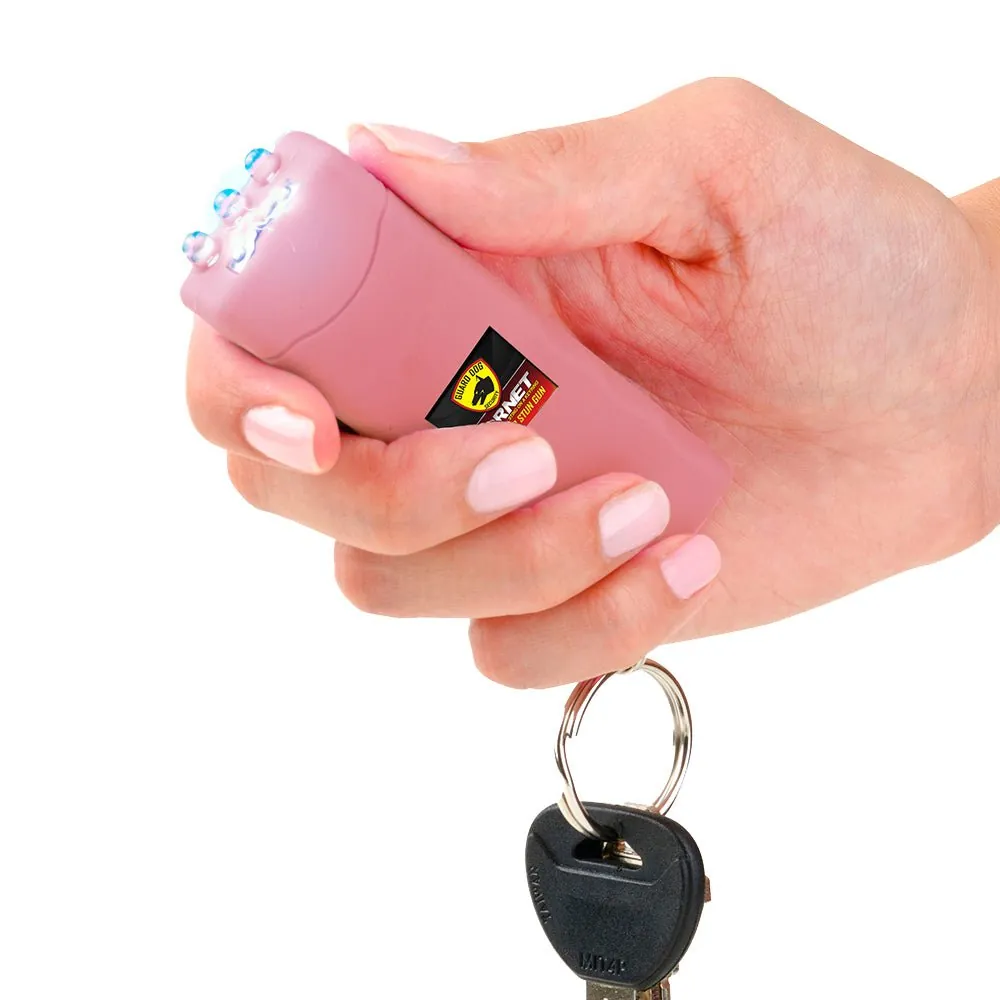
Some brands quote current instead, in amps or milliamps (mA). Guard Dog lists 1.4 mA for the Hornet. Current on its own is no better than voltage as a guide, because it depends on how long each pulse lasts. Charge (µC) already combines the two, which is why it is the figure we show first when a brand gives it.
If a listing gives you only volts, or only milliamps, you know less than you think. Choose on reach, safety and whether you will carry it, and read our stun gun ranking for the models that publish more.
Not as a buying criterion. Both fire the same cartridge up to 15 ft with a laser, and TASER describes the same effect for both. The real differences are shape (pistol-like or flashlight-like), power source (lithium pack or CR123 cells) and price ($399.99 or $449.99 at taser.com). Our TASER ranking compares the four civilian devices on reach, cost per reload and warranty, and leaves the voltage out of it, because TASER does too.
Look at the brand's own page for three things: a µC figure (or the lack of one), how it charges, and the warranty. A brand that only publishes volts is giving you the least useful number. A built-in charge indicator and a USB port matter more in daily life than another million volts on the box.
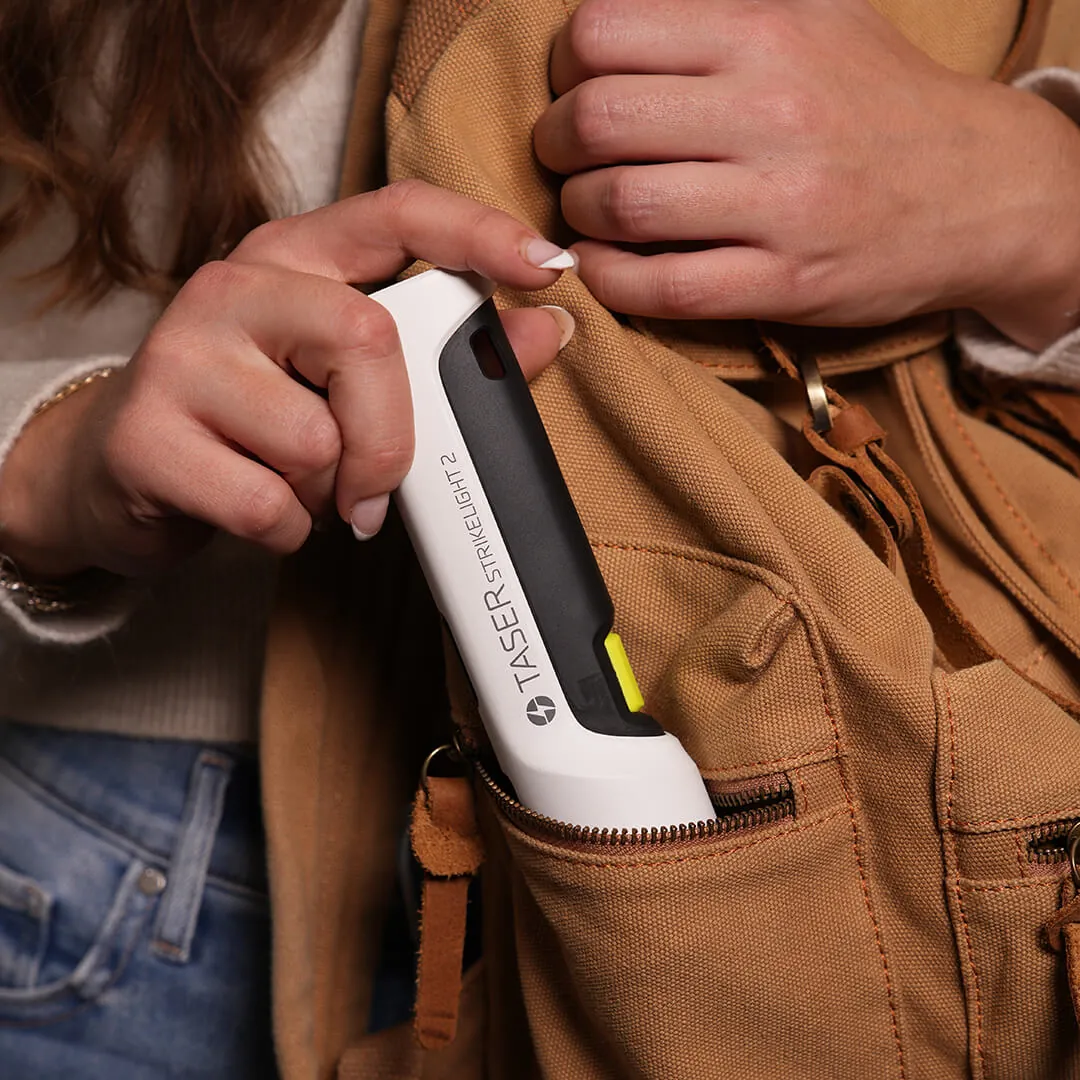
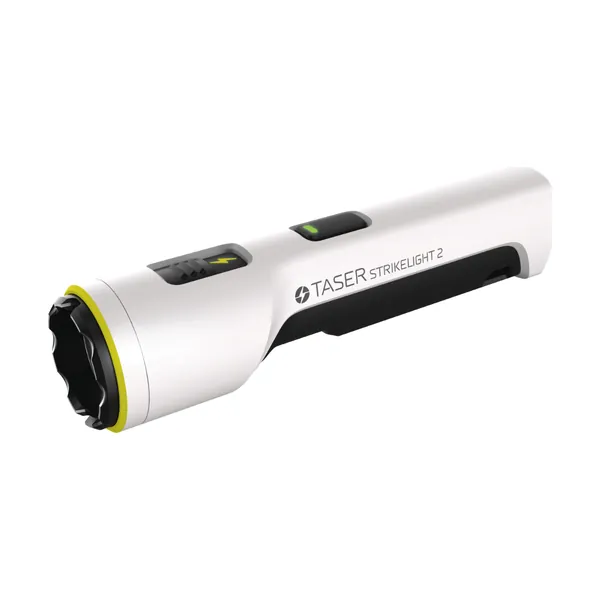
Our reviews quote each brand's figures and say when one isn't published: see the Vipertek VTS-989 review, the Guard Dog Hornet review and the TASER StrikeLight 2 review. The stun gun ranking uses µC where a brand publishes it and ignores volts.
at TASER, checked Nov 16, 2026
Night walks with the dog or to the car, where a flashlight is the first thing you reach for.
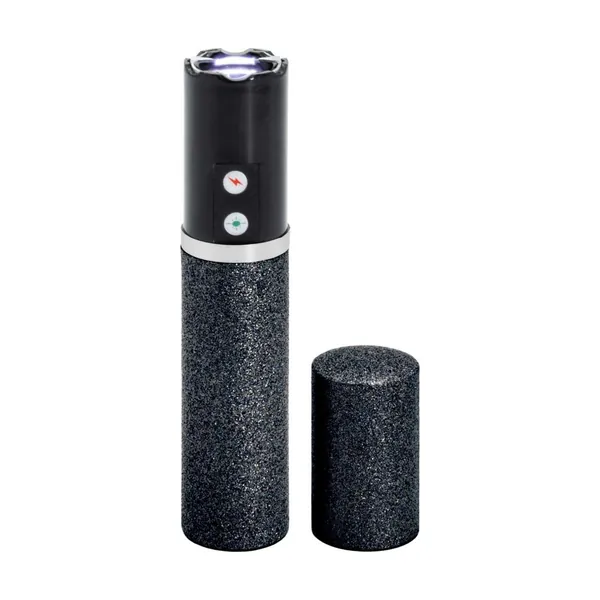
at SABRE, checked Nov 16, 2026
A small stun gun from a brand that publishes its microcoulombs.
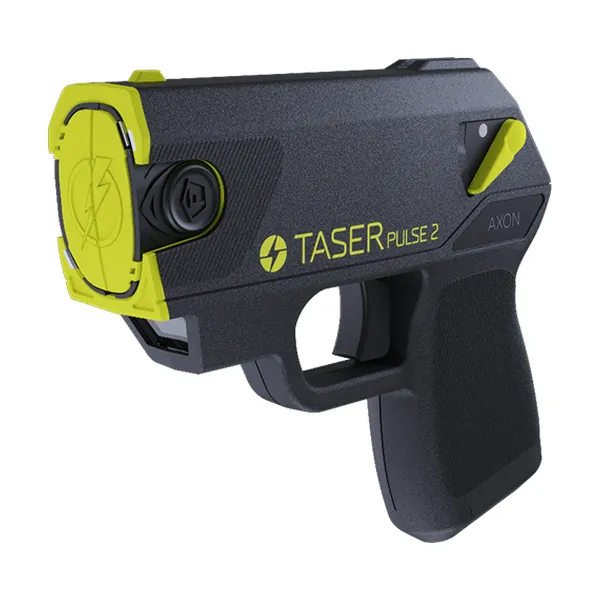
at TASER, checked Nov 16, 2026
Everyday carry in a bag or the car when you want the most distance a pocket device gives.
Best stun gun for self-defenseTASER for self-defense: civilian models rankedBest non-lethal gun for home and car
TASER rates the StrikeLight 2 at 20,000 volts and 10 µC, and publishes no voltage for the Pulse 2, which works by firing probes up to 15 ft.
Law-enforcement models are not sold to civilians and are outside this site. For civilian devices, TASER publishes microcoulombs (10 µC for the StrikeLight 2) rather than a headline voltage.
It sounds like a lot, but voltage mostly describes the spark. The charge delivered (µC) is the better guide, and few budget brands publish it.
TASER says 1.6 µC or less is "noisy but less effective". Among the brands we rank, SABRE publishes 4.20 µC and TASER 10 µC for the StrikeLight 2.
From $169.99 for the StrikeLight 2 to $1,699.99 for the 7 CQ, plus about $30 per live cartridge.
Read the guide
TASER sells direct to every state but Hawaii; authorized dealers sometimes list it lower.
Read the guide
Start with a $9.99 pepper gel and a 130 dB alarm; add a TASER or a launcher for the car or the house.
Read the guide